01
Enamel Defect Restoration
Composite restorations can be used to repair tooth structure affected by decay. The material and treatment plan depend on the tooth and clinical assessment.
Learn about care for tooth decay, pulp inflammation, and damaged teeth, with options based on a dental examination.
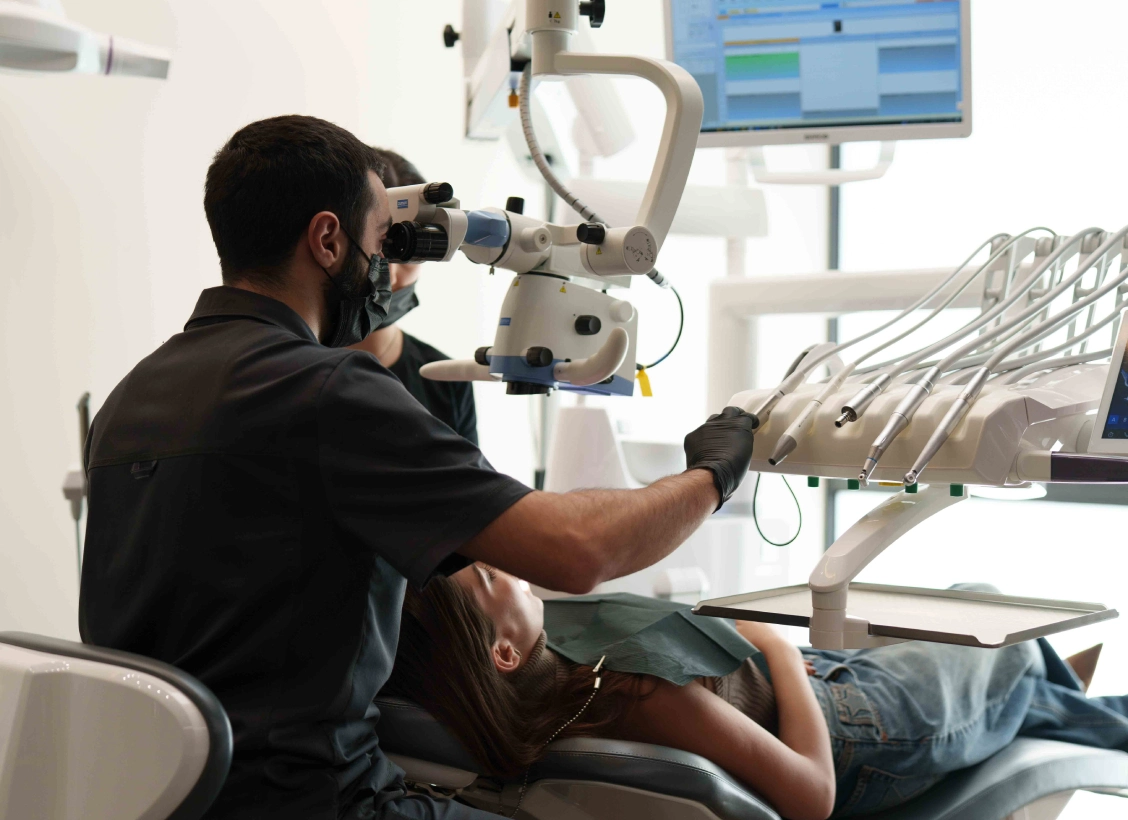
Therapeutic dentistry centers on diagnosing, preventing, and treating diseases of the teeth and supporting tissues, including cavities, pulp inflammation, and gum infections, to restore and preserve oral health.
Treatments are tailored to each patient's needs, using minimally invasive methods to relieve pain, address the root cause, and protect the tooth's natural structure wherever possible.
Composite restorations can be used to repair tooth structure affected by decay. The material and treatment plan depend on the tooth and clinical assessment.
Treatment of inflamed or infected pulp may help retain a tooth when clinically appropriate. Retreatment may be considered when previous root canal treatment needs further care.
Professional scaling and root planing to remove hardened deposits above and below the gumline, halting the progression of gum disease and restoring a healthy oral environment.
Custom-fabricated porcelain or composite restorations for teeth with damage too extensive for a filling but not severe enough for a crown. Precision-fitted for lasting strength and a natural finish.
Root canal treatment is intended to treat inflammation or infection inside a tooth. The experience varies; your dentist can discuss anesthesia, expected sensations, and aftercare.
Early decay often has no symptoms, which is why regular check-ups matter. Sensitivity to hot, cold or sweet foods, visible discoloration or a persistent ache can all be signs worth examining.
Wherever possible we preserve your natural tooth using fillings, inlays, onlays or root canal therapy. Extraction is a last resort when a tooth cannot be restored.
The time needed for a filling depends on the tooth and the extent of treatment. Your dentist can estimate this after an examination.
How often you need an examination or cleaning depends on your oral health and risk factors. Your dentist can recommend an interval for you.
Leave your details and we will contact you to arrange a convenient time.
We do not share your details. By submitting you agree to be contacted by SmileArt regarding your appointment.